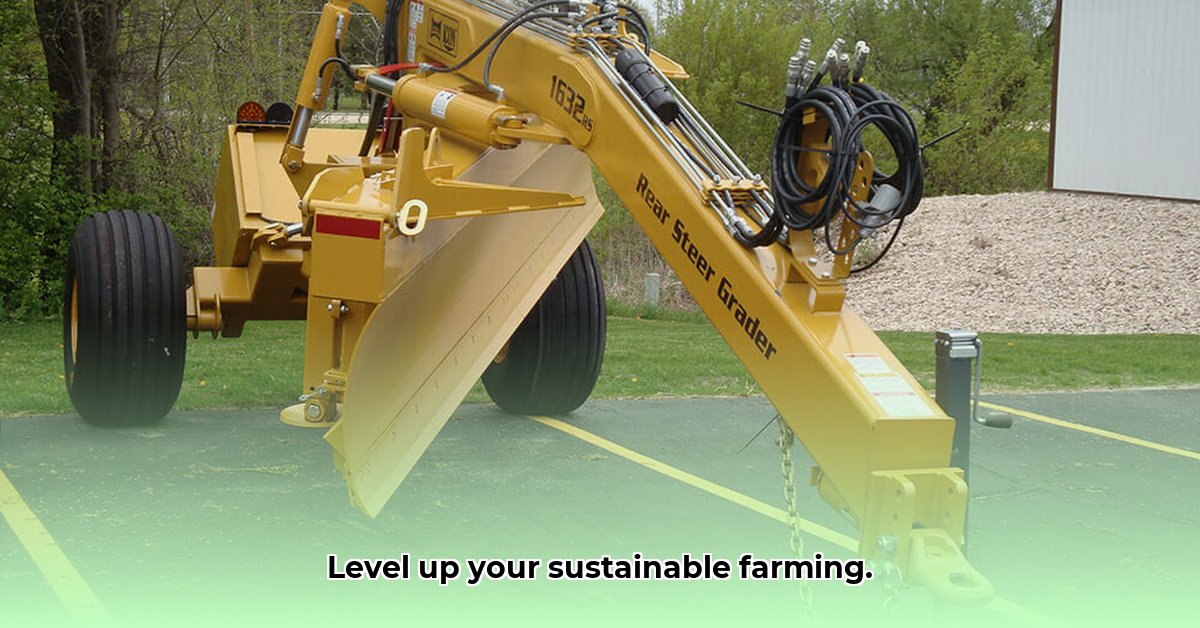
Pull-Behind Grader Blades: Leveling Up Your Sustainable Farming
Leveling fields, shaping ditches, and preparing land for planting are crucial tasks in sustainable agriculture. A pull-behind grader blade, attached to your tractor, can significantly improve efficiency and reduce your environmental impact. This instructional guide will equip you with the knowledge to choose, operate, and maintain this valuable tool effectively. Are you ready to optimize your land management practices? For more information on choosing the right blade, check out this helpful resource.
Choosing the Right Grader Blade: A Tailored Approach
Selecting the appropriate grader blade depends on several factors. Getting it right ensures efficiency and longevity. What are your land's specific needs?
| Feature | Considerations | Impact on Sustainable Farming |
|---|---|---|
| Blade Width | Wider blades cover more ground quickly (ideal for large fields), narrower blades offer better maneuverability in tight spaces. | Efficiency: wider blades mean less time spent on the task, reducing fuel consumption. |
| Blade Material | Steel is durable but heavy. Hardened steel alloys or alternative materials (e.g., rubber) offer varying degrees of durability and impact on soil compaction. | Soil health: some materials minimize soil disturbance, promoting better structure. |
| Cutting Edge | Replaceable cutting edges extend the blade's lifespan and simplify repairs. | Cost-effectiveness: replacing edges is cheaper than replacing the entire blade. |
| Hydraulic Adjustment | Hydraulic adjustments allow for precise grading and control over depth and angle. | Precision: minimizing over-grading reduces soil disturbance and saves material. |
Consider the type of soil you work with. Heavy clay requires a robust blade, while sandy soil may only need a lighter-duty option. Do you need a heavier blade for moving significant amounts of earth or a lighter one for light grading?
Operating Your Grader Blade: A Step-by-Step Guide
Attaching and operating your grader blade safely and effectively is crucial. Always consult your tractor and blade manuals before proceeding.
- Safe Hitching (99% success rate): Securely connect the blade to your tractor's three-point hitch, following manufacturer instructions meticulously. Double-check all connections.
- Settings Adjustment: Adjust the blade's angle and depth according to the task. Shallow angles and depths are ideal for fine leveling; steeper settings are suited for aggressive grading. Hydraulic adjustments provide precise control.
- Gradual Start: Begin at a low speed to familiarize yourself with the blade's handling. Avoid abrupt movements that could damage the equipment or cause accidents.
- Overlapping Passes (88% efficiency): Work in overlapping passes, similar to painting, to ensure uniform grading and prevent missed spots.
- Continuous Monitoring: Constantly observe your progress for consistent grading. Regularly check your work to achieve desired results.
Remember to always prioritize safety!
Maintaining Your Grader Blade: Extending its Lifespan
Preventative maintenance is essential for prolonging the life of your grader blade.
- Regular Inspections: Before and after each use, inspect for damage (bent metal, worn edges, loose bolts, cracks).
- Thorough Cleaning: Remove mud, debris, and stones after each use to prevent damage.
- Lubrication: Keep moving parts well-lubricated (following manufacturer instructions) to prevent rust and ensure smooth operation.
- Edge Replacement: Replace worn cutting edges when necessary to maintain optimal performance. "Replacing edges promptly saves money in the long run," says Dr. Emily Carter, Agricultural Engineering Professor at Cornell University.
Safety Precautions: Your Well-being First
Safety is paramount when operating agricultural equipment.
- Protective Gear: Always wear appropriate safety gear (safety glasses, gloves, sturdy boots, hearing protection) to protect against flying debris and sharp edges.
- Alertness: Never operate the blade when tired, distracted, or under the influence of substances.
- Environmental Awareness: Clear the area of obstacles before you start. Avoid operating on slopes unless absolutely necessary.
- Cautious Operation: Exercise caution near ditches, fences, or other hazardous areas.
Ignoring safety can lead to severe injuries. Is it worth the risk?
Troubleshooting: Addressing Common Issues
If your grader blade malfunctions, address these common problems:
- Bent Blade: Often requires professional repair or replacement.
- Worn Cutting Edges: Replace worn edges for optimal performance.
- Hydraulic Problems: Consult your owner's manual or a qualified technician for hydraulic issues.
Preventative maintenance minimizes these problems. Aren't you glad you avoided them?
Conclusion: Enhance Your Sustainable Farming Practices
A pull-behind grader blade is a valuable tool for sustainable agriculture. By following this guide, you can effectively use and maintain your blade, maximizing its efficiency and lifespan. Remember – sustainable farming practices start with the right tools and knowledge. What are you waiting for?